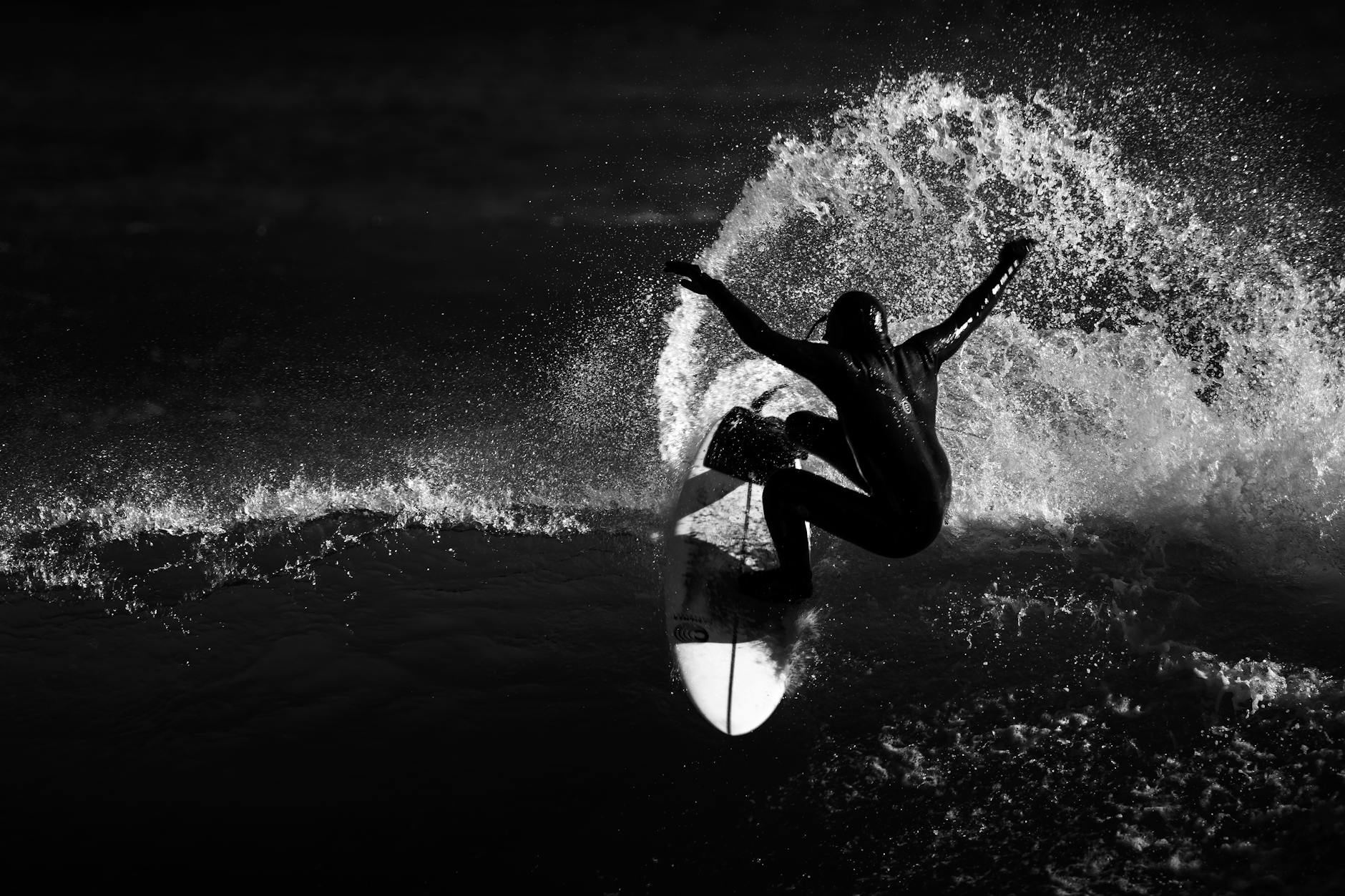
Duck diving poorly wastes energy and keeps you stuck inside. Here's how to get your technique right and reach the lineup clean every time.
Nothing kills a surf session faster than getting worked by whitewater you should have slipped right under. Duck diving is one of those skills that separates the surfers who reach the lineup clean from the ones who get dragged back to the sand three times before they even get past the break. Nail your duck diving technique and every paddle out changes completely - less energy wasted, more time in the water, and a lot less salt water up your nose.
What Is Duck Diving and Why Does It Matter?
A duck dive is the technique shortboarders use to push their board beneath an oncoming wave and pass cleanly through to the other side. Instead of fighting the whitewater or getting swept backward, you use the wave's own energy to carry you through it. The physics are simple - a submerged board with minimal surface area meets far less resistance than a board sitting on top of the water.
The move matters most in beach break surf where you're dealing with multiple lines of whitewater before reaching the peak. Surfers who can't duck dive efficiently burn through their paddle energy before they even catch a wave. Worse, they get caught inside when a set rolls in, which is both exhausting and genuinely demoralizing. Get this right and your whole relationship with bigger surf shifts.
It's also worth noting that duck diving only really works on shortboards and mid-lengths - anything under about 7 feet with enough rocker. High-volume boards and longboards float too much to submerge cleanly, which is why those surfers use the turtle roll instead. If you're on a step-up or a fish in the 5'8" to 6'6" range, duck diving is your move every time.

How Do You Actually Execute a Clean Duck Dive?
Timing is everything. You want to start your duck dive about two to three board lengths before the wave reaches you - not at the last second when you panic and just shove the nose down. Paddle hard toward the incoming wave first, building momentum, then commit to the dive with real intent. Half-hearted duck dives are how you get held down.
Here's the sequence broken down:
- Paddle hard at the wave - momentum helps you push through, not just under
- Grab the rails near the nose - hands at about shoulder width, firm grip
- Push the nose down sharply - use your body weight, not just your arms
- Get your chest low to the board - think of it as diving under the board, not just pressing the nose
- Drive a knee or foot into the tail - this sinks the tail and levels the board underwater
- Angle the board slightly upward - so you rise on the back side of the wave naturally
- Let the wave pass over you - stay calm, stay tucked, trust the process
The knee-or-foot-on-the-tail step is where most beginners go wrong. They push the nose down perfectly but forget to sink the tail, so the board pops back up at a steep angle and catches the full force of the lip. One knee or one foot - usually the back foot pressed into the centre of the tail pad - flattens the trajectory and sends you gliding through cleanly. Practice this part specifically and it clicks fast.
Depth matters too. You only need to get about a foot to two feet under the surface for most beach break waves. Trying to go deeper just wastes time and energy. The goal is to find the calm water just below the turbulence, let the chaos pass above you, and then follow your board's natural buoyancy back to the surface.

What Are the Most Common Duck Diving Mistakes?
Starting too late is the number one issue. Surfers see a wave, hesitate, then panic-dive when it's already on top of them. At that point there's no time to get proper depth and the whitewater just grabs the board. Build the habit of reading the wave early and committing to the dive with two or three strokes of momentum already behind you.
The second big mistake is tensing up. When you're underwater and a heavy section passes over, the instinct is to fight it. Relaxing your body and staying streamlined is counterintuitive but it's what lets the wave flow past you instead of dragging you with it. Keep your eyes open underwater if you can - it helps your spatial awareness and stops that blind panic that makes surfers flail at the worst moment.
The third mistake is not adapting to wave size. A small one-foot closeout takes a shallow, quick duck dive. A solid overhead set wave needs you deeper, with more commitment and a longer hold. Watch how experienced surfers at your local break adjust their technique based on what's coming. If you can browse surf session footage from your spot afterward, watching yourself or other surfers from an outside angle is genuinely one of the fastest ways to identify what's going wrong.
Duck diving is a feel skill more than an instruction skill. Read this, go practice it in small surf until it's muscle memory, then trust that muscle memory when it gets bigger. The surfers who look effortless getting out to the lineup have just done it a few thousand times. You will too.
Looking for your surf photos?
Browse surf session photos and videos from photographers around the world.
Browse Gallery